

OUR PETS. OUR PLANET.
A Plant-Based Omega Story With a Lighter Footprint
Providing a true crop-to-mouth product that enables our beloved pets the opportunity to live longer, healthier lives. Naturally.

OUR PROCESS
From Seed to Bowl
NatrixOne’s sustainability story begins with the crop itself, continues through cultivation and cold pressing, and ends with a tightly controlled, traceable path to your pet’s bowl.

YEARS OF RESEARCH
Twenty Years Behind a Two-Ingredient Product
NatrixOne™ is the culmination of 20 years of research and development on a natural, plant-based, anti-inflammatory, Omega 3 fatty acid, using the camelina Sativa plant and a potent triterpene extracted from olives.
This proprietary 2-ingredient product, called CamOlive™, is unique because it contains powerful phytonutrients, natural vitamin E and a perfect ratio of Omega 3 oils.
A UNIQUE BLEND
Selected Camelina Varietals
We have developed a proprietary blend of selected specific camelina seed varietals to create a perfectly balanced ratio of Omega 3, Omega 6, and Omega 9 fatty acids.
This maximizes Omega 3 bioavailability and ensures delivery of the potent phytonutrients that unleash the antioxidant and anti-inflammatory power of CamOlive™.


AN INCREDIBLE PLANT
Designed by Nature for a Wide Growing Range
As if designed for sustainability, camelina sativa is allelopathic, which means it exudes a natural chemical from its roots eliminating the need for harmful pesticides.
Camelina can grow in semi-arid environments and has been studied for use in agricultural systems where water and input requirements may be lower than for some conventional crops.
Its broad growing range and ability to fit into some crop rotations make camelina especially interesting as farmers explore more diverse agricultural systems.
Learn more about the Roundtable on Sustainable Biomaterials ↗
100% NATURAL & GMO FREE
From Our Seeds to Freshly Bottled Oil
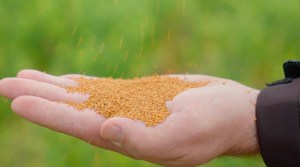
NatrixOne™ is 100% natural and GMO free. Our growers use our own seeds.
We strictly monitor cultivation as well as the onsite cold pressing of our proprietary camelina varietals.
This process has been refined over many years to help preserve the naturally occurring components of the oil through processing and bottling.
We process seeds throughout the year and bottle the finished oil in Cincinnati, Ohio, helping keep the supply chain short and closely controlled.

COMPLETE TRACEABILITY
From Our Seed to Your Pet’s Bowl
At NatrixOne™ we control the process from seed selection and cultivation through pressing, formulation and bottling.
That short supply chain helps us understand where the oil came from, how it was processed and what ultimately reaches your pet’s bowl.
THE BIG PICTURE
Camelina’s Climate Footprint
The sustainability story extends beyond NatrixOne’s own supply chain. Published lifecycle research gives us a way to compare camelina with other commonly used oils and understand where the crop may fit within a lower-impact agricultural system.

GLOBAL PRODUCTION
A Small Crop With a Surprisingly Large Growing Range
Camelina is commercially grown across North America, Europe, Russia and South America. Published research and commercial expansion reports show a crop moving from niche use toward broader adoption.
Russia
Published research reported approximately 75,600 hectares of camelina cultivation in Russia in 2019.
Canada
Approximately 4,050 hectares were reported in 2020, with much of the commercial production centered in Saskatchewan.
Europe
A 2022 review reported approximately 10,000 hectares of camelina cultivation across Europe.
United States
Historical commercial cultivation was reported around 9,700 hectares, with more recent expansion across the Great Plains and western United States.
Argentina
Commercial production expanded rapidly, including roughly 19,000 contracted acres reported in 2023.
Emerging Regions
Brazil and Uruguay have been identified among newer regions targeted for commercial expansion.

ROTATIONAL CROP
Where Camelina Fits May Matter as Much as Where It Grows
Camelina can be grown as an intermediate or rotational crop in some agricultural systems rather than requiring a completely separate growing season.
Researchers have evaluated camelina in wheat-based rotations in the United States, while Canadian growers have explored winter camelina as a way to diversify cereal-based cropping systems.
That flexibility can increase cropping intensity, provide seasonal ground cover and give farmers another productive option during periods when acreage might otherwise remain fallow.
FROM PET NUTRITION TO AVIATION
A Crop Moving Beyond Niche Agriculture
Camelina is now being used not only in nutrition and animal feed, but also in commercial renewable-fuel supply chains.
contracted acres reported in 2023 across the western United States, Argentina, France and Spain.
SUSTAINABLE PRACTICES
A Broader Approach Than One Ingredient
Plant-Based Omega-3
Camelina provides an ALA-rich plant oil without requiring marine fish as the starting source.
Rotational Crop Potential
Camelina can fit into some existing crop rotations and intermediate growing windows.
Traceable Supply Chain
A seed-to-bottle approach makes sourcing and processing easier to understand.
Cold-Pressed Oil
Mechanical cold pressing avoids solvent extraction in the production of the base oil.
Recyclable Packaging
Packaging choices are part of NatrixOne’s broader effort to reduce unnecessary waste.
Continuous Improvement
Sustainability is a moving target, and new crop systems, packaging options and supply-chain practices continue to evolve.
Better Nutrition Can Start With a Better Ingredient Story
Camelina gives NatrixOne a plant-based omega foundation, a traceable agricultural supply chain and a crop story that extends well beyond the bottle.